Operational Technology (OT) encompasses the sensors, controllers, and control systems that manage industrial processes, and in 2025 the stakes for industrial organizations have never been higher. Rapid IT-OT convergence, widespread IIoT deployments, and geopolitical tensions combine to expand attack surfaces and raise the potential for safety-critical disruptions, financial loss, and regulatory scrutiny.
This article explains the top ten OT security threats for 2025, details how those threats operate in industrial environments, and maps practical protections—covering ransomware mechanics, supply chain risks and SBOM practices, legacy system compensations, IIoT hardening, and AI’s dual role as an enabler and defender. Readers will find sector-relevant mitigation patterns, checklists for secure remote access and segmentation, and tables that compare ransomware variants, map SBOM elements to supplier controls, and prioritize defensive controls by threat coverage.
What Are the Most Critical OT Security Threats Industrial Organizations Face in 2025?
Industrial organizations face a concentrated set of threats in 2025 driven by increased connectivity, AI-enabled attack tooling, and targeted adversaries. The following numbered list summarizes the top ten OT threats that practitioners should prioritize across safety, availability, and integrity dimensions. These entries use semantic relationships to link each threat to affected OT components such as PLCs, DCS, SCADA, and IIoT gateways.
These top-10 threats reflect year-over-year trends and new vectors introduced by IIoT and AI; the next subsection examines ransomware in depth, showing operational impacts and containment priorities that segue naturally into nation-state threat patterns.
How Is Ransomware Disrupting Industrial Control Systems and Operations?
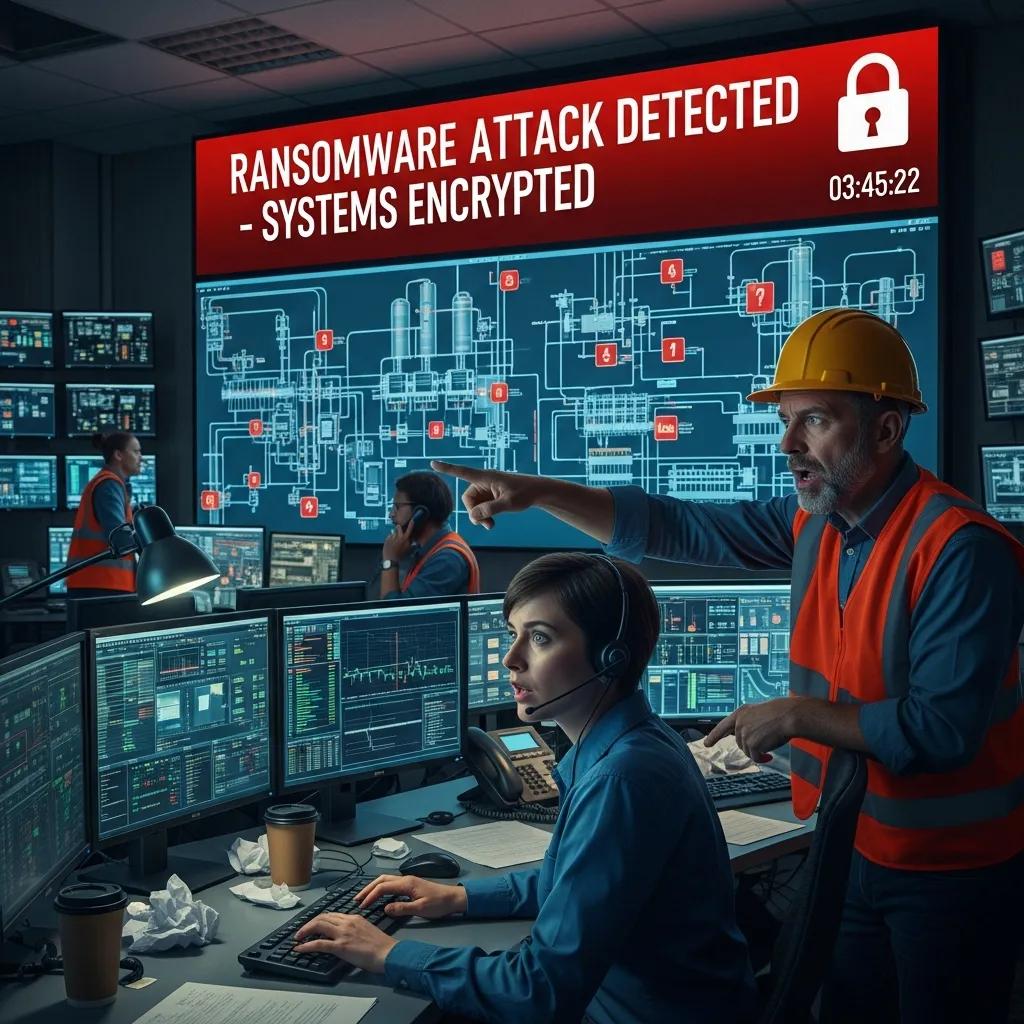
Ransomware in OT often aims at availability rather than pure data theft, encrypting operator HMIs or corrupting PLC logic to halt production or create unsafe conditions. Attackers typically combine phishing, compromised vendor remote access, and supply-chain payloads to gain a foothold, then move laterally to reach engineering workstations and control network segments. Operational impact ranges from brief telemetry loss to prolonged outages with safety consequences, and incident response must prioritize human safety, system isolation, and preservation of forensic artifacts.
Why Are Nation-State Cyber Threats Increasingly Targeting Critical Infrastructure?
Nation-state actors pursue OT targets to achieve strategic objectives including sabotage, intelligence collection, and coercive leverage. These groups use bespoke ICS-aware toolkits and long-term infiltration techniques to avoid detection. With geopolitical tensions rising in 2025, the likelihood of targeted campaigns against energy, water, and manufacturing sectors has increased, which compels organizations to strengthen detection and cross-sector information sharing.
How Do Supply Chain Vulnerabilities Expose Industrial OT Environments to Cyberattacks?
Supply chain vulnerabilities extend risk beyond onsite assets to include third-party integrators, firmware vendors, and cloud maintenance services, creating multiple channels for compromise. When suppliers use insecure remote access or deliver components without transparent SBOMs, attackers can insert malicious code or exploit outdated libraries. An SBOM (Software Bill of Materials) is an inventory of software components and versions that enables rapid identification of vulnerable libraries or firmware affecting PLCs, gateways, and engineering tools. Effective mitigation blends contractual requirements, SBOM adoption, and technical controls like firmware signing and monitored jump hosts.
Why Are Legacy Systems a Major Security Risk in OT Networks?
Legacy OT systems often run unsupported operating systems, use proprietary protocols without authentication, and cannot be patched without risking process stability. These unpatchable devices become attractive targets for attackers who can exploit default credentials, firmware flaws, or unsegmented access. Mitigation requires compensating controls such as virtual patching, micro-segmentation, network monitoring tailored to ICS protocols, and a prioritized modernization roadmap driven by criticality assessments.
How Does the Expansion of IIoT and Edge Devices Increase OT Attack Surfaces in 2025?
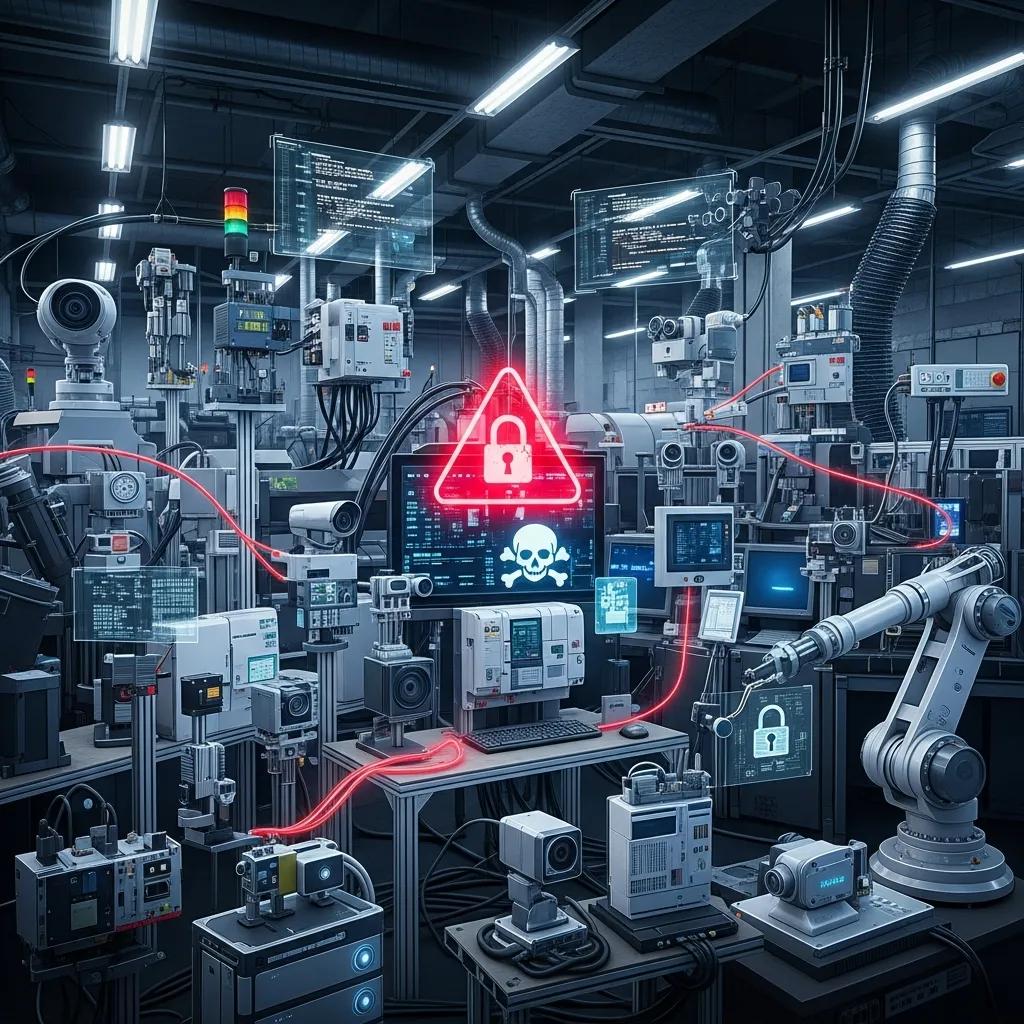
Proliferation of IIoT sensors, edge gateways, and third-party telemetry devices multiplies endpoint diversity and creates significant inventory and lifecycle management challenges. Many IIoT devices ship with outdated libraries, open debug ports, or weak TLS configurations. Compromised IIoT fleets can be weaponized into botnets that generate DDoS traffic, overwhelming remote telemetry servers and degrading operational visibility. Mitigations include secure boot, firmware signing, lifecycle management with automated update pipelines, network isolation, device hardening, rate limiting, and architectural patterns that allow local autonomous control during network outages.
In What Ways Is Artificial Intelligence Changing the OT Cybersecurity Landscape?
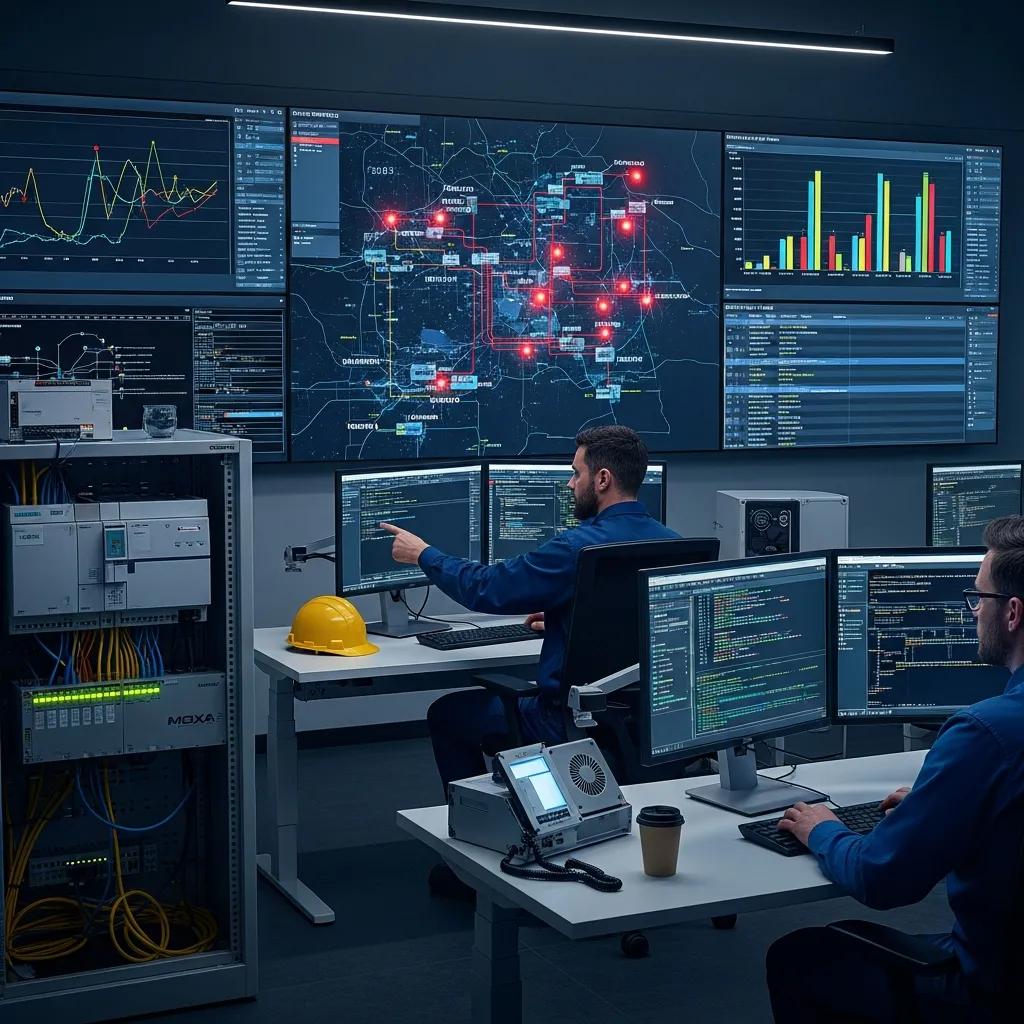
Artificial intelligence is reshaping OT cybersecurity in two major ways: offensively, it enables more convincing social engineering, faster malware generation, and adaptive attack chains; defensively, it powers anomaly detection, predictive maintenance integrations, and automated containment playbooks. Generative AI crafts highly personalized phishing emails that reference specific equipment names or recent maintenance work, while voice deepfakes enable vishing attacks impersonating managers. On defense, AI and ML models build behavioral baselines for sensors and actuators, enabling detection of subtle deviations such as anomalous setpoint changes that traditional rule engines might miss. However, implementations require curated OT datasets, careful tuning to reduce false positives, and governance to ensure safety-first automated responses.
Resources & References
CISA Industrial Control Systems (ICS-CERT)The U.S. Cybersecurity and Infrastructure Security Agency’s ICS division provides alerts, advisories, and best practices for securing operational technology and critical infrastructure. https://www.cisa.gov/topics/industrial-control-systems
NIST Special Publication 800-82Guide to Industrial Control Systems (ICS) Security from the National Institute of Standards and Technology, offering comprehensive technical guidance for OT environments. https://csrc.nist.gov/publications/detail/sp/800-82/rev-3/final
Canadian Centre for Cyber Security (CCCS) – ICS GuidanceCanada’s national authority on cybersecurity provides resources and guidance specific to protecting industrial control systems. https://www.cyber.gc.ca/en/guidance/industrial-control-systems-ics
Dragos Industrial CybersecurityLeading industrial cybersecurity company offering threat intelligence, research, and analysis specific to OT environments. https://www.dragos.com/
SANS ICS SecurityThe SANS Institute provides training, resources, and research focused on industrial control system security. https://www.sans.org/industrial-control-systems-security/
ICS-CERT AdvisoriesReal-time security advisories and vulnerability disclosures affecting industrial control systems and SCADA environments. https://www.cisa.gov/news-events/cybersecurity-advisories
ENISA ICS Security GuidelinesThe European Union Agency for Cybersecurity offers guidelines and recommendations for securing industrial control systems. https://www.enisa.europa.eu/topics/critical-information-infrastructures-and-services/scada-and-industrial-control-systems
About the Author
Krikor Tengerian .
Connect: LinkedIn | Secur-IT Data Solutions

Krikor Tengerian is the CEO and founder of Secur-IT Data Solutions, a Toronto-based cybersecurity firm focused on helping Canadian organizations secure their infrastructure and critical systems. With over 25 years of experience across cybersecurity and IT infrastructure, he has supported organizations in hardening networks, protecting critical workloads, and aligning security controls with business and regulatory requirements.
Krikor actively shapes the direction and themes of Secur-IT’s educational content, collaborating with AI tools to structure, refine, and expand articles while providing the real-world context, use cases, and review to keep them accurate and practical for readers. He regularly shares insights on OT security, threat detection, incident response, and Canadian cybersecurity compliance to help industrial and commercial organizations better understand and reduce their cyber risk.