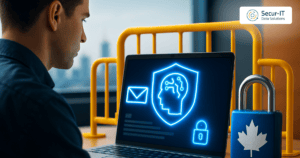

Toronto healthcare data breaches have surged dramatically in recent years, putting GTA hospitals, clinics, and medical practices at serious risk. As Ontario’s healthcare sector becomes increasingly digitized, cybercriminals are targeting patient records, billing systems, and connected medical devices. Understanding these threats — and how to stop them — is critical for every healthcare organization operating in Toronto and the surrounding GTA.
Why Toronto Healthcare Data Breaches Are Increasing
Healthcare organizations in Toronto hold enormous amounts of sensitive patient data, making them prime targets for ransomware attacks and data theft. The Office of the Privacy Commissioner of Canada and Ontario’s Information and Privacy Commissioner have both reported a rise in healthcare-related breaches. Factors driving this trend include legacy IT systems, underfunded cybersecurity teams, and the rapid adoption of cloud-based health records without adequate security controls.
Under PHIPA (Personal Health Information Protection Act), Ontario healthcare providers are legally required to protect patient data and report breaches to regulators. Failure to comply can result in significant fines and reputational damage — yet many Toronto hospitals and clinics remain vulnerable.
Top Cybersecurity Threats Facing Toronto Hospitals in 2025
1. Ransomware Attacks
Ransomware remains the number one threat to Toronto healthcare data security. Attackers encrypt patient files and demand payment to restore access. In 2024, several Ontario hospital networks suffered major ransomware attacks, forcing them to delay surgeries and divert patients to other facilities.
2. Phishing and Social Engineering
Healthcare staff are frequently targeted with phishing emails designed to steal login credentials. A single compromised account can provide attackers with access to thousands of patient records.
3. Third-Party Vendor Breaches
Many GTA healthcare organizations rely on third-party vendors for billing, scheduling, and medical devices. If a vendor’s system is breached, the hospital’s patient data may also be exposed — even if the hospital’s own defenses are strong.
4. Insider Threats
Whether accidental or malicious, insider threats are a significant source of healthcare data breaches in Toronto. Unauthorized access to patient records by employees — even for non-malicious reasons — can trigger PHIPA violations.
5. Unsecured Medical Devices
Connected medical devices (IoT) often run outdated firmware and lack proper security controls. These devices can serve as entry points for attackers to move laterally through a hospital network.
PHIPA Compliance: What Toronto Healthcare Organizations Must Do
PHIPA requires Toronto healthcare providers to implement “reasonable” administrative, technical, and physical safeguards to protect personal health information. Key requirements include:
- Encrypting patient data at rest and in transit
- Implementing access controls and multi-factor authentication
- Conducting regular security risk assessments
- Having an incident response plan in place
- Reporting breaches to the IPC and affected individuals
Secur-IT helps Toronto healthcare organizations meet PHIPA compliance requirements through our managed cybersecurity services — including 24/7 MDR, endpoint protection, and security awareness training for healthcare staff.
How to Prevent Toronto Healthcare Data Breaches
Preventing healthcare data breaches requires a layered cybersecurity approach. The most effective strategies include:
- Managed Detection and Response (MDR): 24/7 monitoring of your network for suspicious activity
- Email Security: Advanced filtering to block phishing, malware, and business email compromise
- Endpoint Detection and Response (EDR): Real-time protection for all workstations and medical devices
- Security Awareness Training: Educating healthcare staff to recognize and report phishing attempts
- Vulnerability Assessments: Regular scanning and patching to close security gaps before attackers exploit them
According to the Information and Privacy Commissioner of Ontario, healthcare organizations that proactively assess and address vulnerabilities significantly reduce their risk of a reportable breach.
Secur-IT: Toronto’s Trusted Healthcare Cybersecurity Partner
Secur-IT Data Solutions has over 25 years of experience protecting Toronto and GTA organizations, including healthcare providers. We understand the unique compliance requirements under PHIPA and the operational demands of healthcare environments. Our team provides rapid incident response, PHIPA compliance advisory, and ongoing managed security services — so your staff can focus on patient care while we handle cybersecurity.
Is your Toronto healthcare organization protected against data breaches? Contact Secur-IT today for a Free Security Assessment and see how we help GTA hospitals and clinics stay secure and PHIPA-compliant. See what our clients say on Clutch.co.
How Toronto Healthcare Organizations Can Prevent Data Breaches in 2025
Toronto healthcare data breaches are preventable with the right cybersecurity strategy. GTA hospitals, clinics, and healthcare networks must implement a layered security approach that addresses both technical vulnerabilities and human risk. The Canadian Centre for Cyber Security provides guidance specifically for critical infrastructure sectors — including healthcare — that all Toronto healthcare organizations should follow.
Key prevention measures for Toronto healthcare data breaches include:
- PHIPA-compliant data encryption — Encrypt patient records at rest and in transit across all GTA healthcare systems
- Multi-factor authentication (MFA) — Mandatory for all staff accessing electronic health records in Toronto hospitals and clinics
- 24/7 SOC monitoring — Continuous threat detection to stop Toronto healthcare data breaches before they cause harm
- Staff security awareness training — Human error remains the #1 cause of healthcare data breaches in Ontario
- Incident response planning — PHIPA requires prompt reporting of breaches; having a tested IR plan minimizes damage
For authoritative guidance on protecting healthcare data, visit the Canadian Centre for Cyber Security — Canada’s national authority on cybersecurity threats and best practices for critical sectors including healthcare.
Is your Toronto or GTA healthcare organization protected against data breaches? Secur-IT Data Solutions specializes in PHIPA-compliant cybersecurity for Toronto hospitals, clinics, and healthcare networks. Contact us today for a Free Security Assessment and see what our healthcare clients say about us on Clutch.co.

Krikor Tengerian is the CEO and founder of Secur-IT Data Solutions, a Toronto-based cybersecurity firm focused on helping Canadian organizations secure their infrastructure and critical systems. With over 25 years of experience across cybersecurity and IT infrastructure, he has supported organizations in hardening networks, protecting critical workloads, and aligning security controls with business and regulatory requirements.
Krikor actively shapes the direction and themes of Secur-IT’s educational content, collaborating with AI tools to structure, refine, and expand articles while providing the real-world context, use cases, and review to keep them accurate and practical for readers. He regularly shares insights on OT security, threat detection, incident response, and Canadian cybersecurity compliance to help industrial and commercial organizations better understand and reduce their cyber risk.